"I'm tired of giving a reason,
When we're the only thing left to believe in."
- Manic Street Preachers, 'The Masses Against the Classes'

1. Prologue To History
"I guess we still believe in the power of three or
four minutes of music and lyrics
four minutes of music and lyrics
to change the way you think about the day,
or at least, the hour.
or at least, the hour.
I know it still works for me."
Nicky Wire in a BBC 6Music interview, 2014
I am approaching this blog with a great deal of exhilaration but also, a touch of trepidation. To put into words why the Manic Street Preachers mean so much to me, and to do them and my long standing relationship with them justice seems a beautiful but potentially hazardous undertaking. Another reason for my hesitation is that when I had my first genuine obsession with them, I was in a pretty low place, and I can hardly recognise who I was when I think back to those days now. But, I am not afraid to Rewind the Film and the perfect excuse has arisen seeing that my friend, the poet and vegan chef, Cornelius...
(https://www.facebook.com/corneliusthepoet)
...has pretty much commissioned me to write this piece, which, for all my fears, is just too tempting to refuse! So, join me on a journey, if you will, that takes in passion, politics, love, hate, class war, the grey melancholy Irish sea, small black flowers that grow in the sky, Empty Souls, and vast amounts of leopard print, eye-liner and glitter, and a band that, along with the most beautiful creature in the universe, my wife Lydia, probably saved my life a long long time ago.
Q: If people were to take one thing from
the Manic Street Preachers, what would
you like it to be?
the Manic Street Preachers, what would
you like it to be?
Nicky: “Manic Street Preachers is about thought,
knowledge, care, detail, loyalty, anger and hate."
knowledge, care, detail, loyalty, anger and hate."
- Interview, From 2008
The first time I saw the Manics in concert back in the 1990s, I was so overwhelmed that I could hardly speak for hours afterwards. James Dean Bradfield's astonishing voice, the glamour of the band, the power of the songs, the intensity of the performance, and the politically pointed images and statements that were bombarded at the audience were absolutely electrifying, and I had witnessed nothing quite like it before. And whilst my fellow travellers in the car on the way home discussed things like James's guitar playing and the guitars he had used, Nicky Wire's dress sense (i.e., mini skirt!), the "weirdos" in the audience &, for heaven's sake, other Welsh bands that they thought were equally as good, such as the Stereophonics and The Super Furry Animals (Heaven help us!), I knew, whilst sitting quietly in a contemplative deep silence in the back of the car, that beyond any doubt my life had changed forever. I could probably look back at my life at this juncture and put it into two very distinctive categories: BM and AM. That is, Before the Manics and After. The main thing though is that I was completely enraptured, and with each passing year it seems my relationship with them grows ever deeper.
2. This Is Yesterday
"You're tender & you're tired,
You can't be bothered to decide,
Whether you live or die,
Or just forget about your life,
Drift away & die...
Never say goodbye,
Drift away & die...
- Manic Street Preachers, 'You're Tender & You're Tired'
When I first heard this song, with its haunting lyric and James's magnificent vocal, delivered with such yearning and poignancy, I thought my heart would shatter. It terrifies me somewhat to remember that I felt like it had been written especially for me. I know that sounds dreadfully cliched and corny, but those words pierced my heart like an arrow and have probably lodged there for ever. The Manics have better and stronger songs than this, but when the album that it is from, This Is My Truth Tell Me Yours was released, I was so hooked that my obsession with them reached fever pitch. I literally could not go a single day without listening to them, and my day was planned out like a junkie, making sure there was always slots available where I could feed on this particular drug. But unlike something like heroin, this drug was to have a profoundly positive influence on my life. Many people can find the Manics a bit too depressing, but the incredibly beautiful melancholy that seeps from almost every song on This Is My Truth, and countless others too on their previous albums, held out an invisible hand that seemed to say, "You're not the only one who feels like this." Whilst most people of a similar age to me in the UK were getting bombed out of their skulls on the macho revival of champagne supernovas and the horrific sideburns of Supergrass, I had decidedly different dreams and thoughts circling around my head. My health had taken a definite step in the wrong direction by this point, as my Cystic Fibrosis symptoms had been getting worse and more frequent, and I was having to face up to the fact that my short, but dearly loved professional singing and acting career was over, which had shattering affects on my confidence, which wasn't helped by the fact that a few good friends aside, most of the other people that I knew had drained whatever precious little confidence that I had remaining like hungry vampires. Without doubt, I was an Empty Soul, and rather like Coleridge's mariner, lost and adrift on a wide, wide, sea. But somehow, the Manics helped me to find myself again. Released in August 1998, I made cassettes (remember them!) of all the slower Manics songs from This Is My Truth and each of their four previous albums, and all the B-sides that I had, for example: 'Little Baby Nothing,' 'Motorcycle Emptiness,' 'La Tristesse Durera,' 'The Girl Who Wanted to be God,'(which is basically the Manics doing 'Dancing Queen by Abba - utter, euphoric bliss!), 'Roses In the Hospital,' 'Donkeys,' 'Small Black Flowers That Grow in the Sky,' 'This Is Yesterday,' etc, etc, and during those last days of summer and on into early autumn, and, when finances would allow, I would buy a cheap return train ticket from Flint to Holyhead, and listen to those glorious songs on my headphones whilst drinking British Rail tea and staring and day-dreaming out of the carriage window, which would at first take in the sad, run-down seaside towns of Prestatyn and Rhyl, and then, further up the North Wales coast, the glorious, sometimes snow-kissed mountains of Snowdon, along with some of Wales's most distinctive castles on one side...


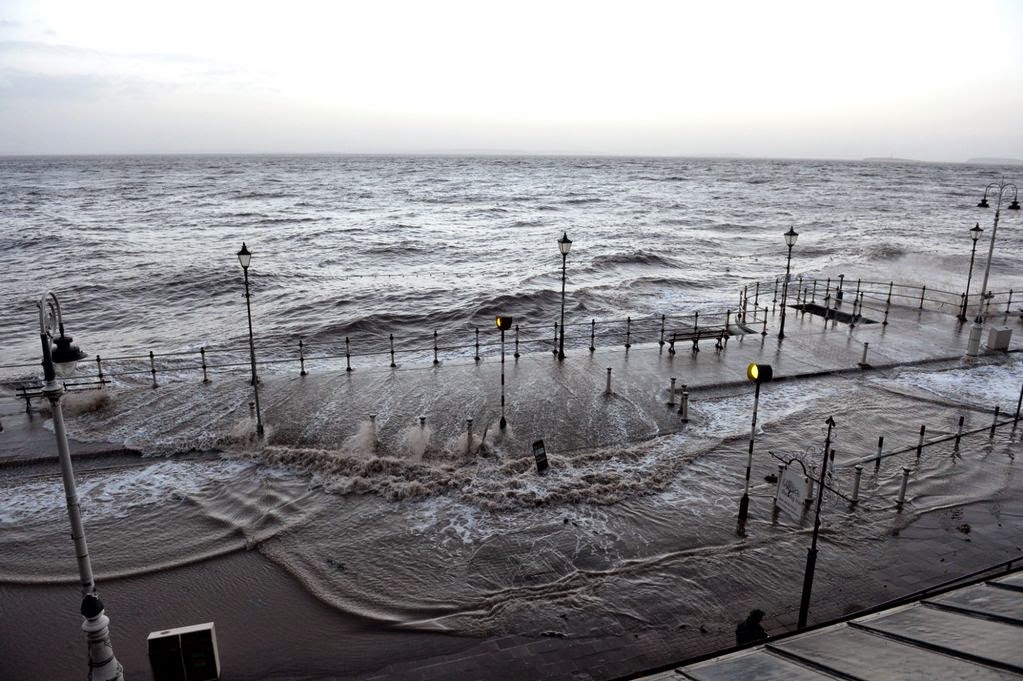
and the often tempestuous Irish sea on the other...

3. Feminine Is Beautiful


- The Manics with Guest Vocalist Traci Lords
So... so much so far about my history with the Manics, but now is surely the time to introduce the members of the band themselves. Nicky Wire, James Dean Bradfield, Sean Moore and Richey Edwards.
When the Manics first arrived on the scene, the UK indie scene was dominated by macho, laddish, beer-swilling, apolitical football stadium bands such as Oasis, yet the Manics seemed to stand as far as possible away from this to the point where they were in fact its complete antithesis. The Manics, particularly in the first few years of their inception, embraced femininity, glamour, and were, just as they are now, fiercely political, having been formed in part by having lived through the devastating effects of the Miner's Strike and Margaret Thatcher's Conservative government on the mining town of Blackwood in South Wales where they had lived. And whereas the likes of Oasis embraced a dumbed down version of Beatles-esque rock, the Manics were immensely proud of their intelligence, and Richey & Nicky's interviews, the sleeve notes to their records and even their promo videos, were laced with quotes from writers and intellectuals such as Karl Marx, Tennessee Williams & J.D. Salinger. Their lyrics were also far beyond any of their contemporaries, and songs such as 'Little Baby Nothing,' '4st 7lbs,' and 'La Tristesse Durera (Scream To A Sigh)' dealt with subjects that most male rock n roll bands wouldn't dream of approaching, i.e., feminism, anorexia and the despair of aging war veterans. The enigma that was Richey Edwards, and the mystery and sadness of his disappearance in 1995, only added to the allure. But I'm getting ahead of myself. All of the band members hold a very special place in my heart, and I think it will be easier to go through them all individually.

Where on earth do I start with the only bass player I've ever truly noticed, the one & only Nicholas Alan Wire? As full of style as Queen's John Deacon is without it, and don't get me wrong, I adore Queen as well!, Nicky Wire, a glam, Welsh 'Mac The Mouth', who is certainly not afraid to speak his mind and lay into everything that he hates about culture, politics and particularly other musicians, is possibly the greatest front man that has never been, and he certainly has few peers when it comes to what I consider his most important part in the band: writing lyrics. I always find it a bit strange trying to write about the power of lyrics as so much of their impact comes from the combination of the words, the delivery of the singer, and the sweeps and dramatic flows of the music itself. Although Richey often gets greater credit for his lyrics, Nicky Wire's have an indelible stamp all of their own. The opening line to 'A Design For Life', "Libraries gave us power," has achieved the kind of celebrated but very un-rock n roll status that has led to it being inscribed on a plaque outside Cardiff's city library, and male Welsh voice choirs regularly sing that working class anthem as part of their repertoire, alongside more traditional hymns and folk songs. On a more personal note, I remember my Taid telling me all about a black American singer and political activist that he admired called Paul Robeson, who had a bass baritone voice as deep as thunder, and who was made an honoury Welshman by the miners in Wales in the late 1920s. Robeson had been blacklisted in his home country of America for his left wing political beliefs and when he was exiled, the people of Wales took him to their hearth and to their hearts. I'm sure you'll appreciate my genuine delight when, years later, I was able to read out to him the lyrics to a song that the Manics had just released with a lyric by Nicky Wire called 'Let Robeson Sing', and to see my Taid's face light up when he realised that the torch had been passed to another generation, & that perhaps the courageous stories of people like Paul Robeson would not be forgotten after all, not yet anyhow, and how much that meant to him. Here is a link to Paul Robeson singing 'Land of my Fathers'...
Going back to Nicky Wire's lyrics, another favourite of mine is 'Tsunami', a song that after all these years still sends shivers hurtling down my spine whenever I hear it, particularly the live version, with Nicky's lyric about crippling anxiety and some of the measures the narrator uses to try and combat it:
Tsunami tsunami came washing over me
The true majesty of this song lies not just in the lyric, however, but in its totality, from the electric sitar which gives it an Echo & The Bunnymen's 'Killing Moon' feel, to James's astonishing vocal and soaring melody through to a line in the first verse that reads, "Disco dancing with the rapists, your only crime is silence...." Getting lines like that into a top 40 single takes some doing.
And on stage, Nicky is a compelling performer. Almost always decked out in magnificently punk glam outfits, and with a feather boa wrapped around his mic stand, he is the one that continues the glam and glitter heritage of the band since Richey's disappearance. Scissor jumping and kicking to great heights, which can be quite a hazard due to the minimal length of some of the skirts that he wears!, he prowls the stage like a panther, and when he is in a good mood, some of the comments and banter that he speaks in-between songs can be gloriously entertaining. Sometimes humorous, often scathing at the Tories, always respectful when introducing the songs that have lyrics that were penned by Richey, the Wire is a fascinating performer to witness. The only problem I have had with him is that for some reason, he absolutely slated Rufus Wainwright in an interview that I read somewhere a few years ago. Having one of your heroes laying into another of your heroes is not a pleasant experience and I still don't think I've got completely over it, and I'm not sure that I ever will. I certainly had to go and have a lie down after I'd read it. As a beautifully spoiled only child, sibling rivalry is something unknown to me, and as I regard my heroes as my family it was a quite dreadful and distressing experience. But, who am I to tell Nicky Wire what to think? I have also learned to take some of his scatter gun outbursts with a pinch of salt, and perhaps, when all is said and done, it could well be the simple result of one dandy's mutual dislike and mistrust of another, for no matter how much we try to pretend otherwise & convince ourselves that it is not the case, in actual reality, if we truly look into the deepest recesses of our hearts, none of us like to be upstaged, do we darlings?


- Nicky Wire on Richey.
When the Manics first arrived on the scene, the UK indie scene was dominated by macho, laddish, beer-swilling, apolitical football stadium bands such as Oasis, yet the Manics seemed to stand as far as possible away from this to the point where they were in fact its complete antithesis. The Manics, particularly in the first few years of their inception, embraced femininity, glamour, and were, just as they are now, fiercely political, having been formed in part by having lived through the devastating effects of the Miner's Strike and Margaret Thatcher's Conservative government on the mining town of Blackwood in South Wales where they had lived. And whereas the likes of Oasis embraced a dumbed down version of Beatles-esque rock, the Manics were immensely proud of their intelligence, and Richey & Nicky's interviews, the sleeve notes to their records and even their promo videos, were laced with quotes from writers and intellectuals such as Karl Marx, Tennessee Williams & J.D. Salinger. Their lyrics were also far beyond any of their contemporaries, and songs such as 'Little Baby Nothing,' '4st 7lbs,' and 'La Tristesse Durera (Scream To A Sigh)' dealt with subjects that most male rock n roll bands wouldn't dream of approaching, i.e., feminism, anorexia and the despair of aging war veterans. The enigma that was Richey Edwards, and the mystery and sadness of his disappearance in 1995, only added to the allure. But I'm getting ahead of myself. All of the band members hold a very special place in my heart, and I think it will be easier to go through them all individually.
4. Nicky Wire

"We all decided that from the start, me and Richey can’t write music but we can write lyrics and look pretty tarty."
- Nicky Wire
- Nicky Wire
Q: "Did the other Manics ever get distracted from
playing at the sight of you jumping
playing at the sight of you jumping
around in a short skirt?"
Nicky: "They’re more distracted by the
horrendous noise of my bass."
horrendous noise of my bass."
- The Independent, June 2001
Where on earth do I start with the only bass player I've ever truly noticed, the one & only Nicholas Alan Wire? As full of style as Queen's John Deacon is without it, and don't get me wrong, I adore Queen as well!, Nicky Wire, a glam, Welsh 'Mac The Mouth', who is certainly not afraid to speak his mind and lay into everything that he hates about culture, politics and particularly other musicians, is possibly the greatest front man that has never been, and he certainly has few peers when it comes to what I consider his most important part in the band: writing lyrics. I always find it a bit strange trying to write about the power of lyrics as so much of their impact comes from the combination of the words, the delivery of the singer, and the sweeps and dramatic flows of the music itself. Although Richey often gets greater credit for his lyrics, Nicky Wire's have an indelible stamp all of their own. The opening line to 'A Design For Life', "Libraries gave us power," has achieved the kind of celebrated but very un-rock n roll status that has led to it being inscribed on a plaque outside Cardiff's city library, and male Welsh voice choirs regularly sing that working class anthem as part of their repertoire, alongside more traditional hymns and folk songs. On a more personal note, I remember my Taid telling me all about a black American singer and political activist that he admired called Paul Robeson, who had a bass baritone voice as deep as thunder, and who was made an honoury Welshman by the miners in Wales in the late 1920s. Robeson had been blacklisted in his home country of America for his left wing political beliefs and when he was exiled, the people of Wales took him to their hearth and to their hearts. I'm sure you'll appreciate my genuine delight when, years later, I was able to read out to him the lyrics to a song that the Manics had just released with a lyric by Nicky Wire called 'Let Robeson Sing', and to see my Taid's face light up when he realised that the torch had been passed to another generation, & that perhaps the courageous stories of people like Paul Robeson would not be forgotten after all, not yet anyhow, and how much that meant to him. Here is a link to Paul Robeson singing 'Land of my Fathers'...
Going back to Nicky Wire's lyrics, another favourite of mine is 'Tsunami', a song that after all these years still sends shivers hurtling down my spine whenever I hear it, particularly the live version, with Nicky's lyric about crippling anxiety and some of the measures the narrator uses to try and combat it:
"Can't work at this anymore
Can't move I want to stay at home
Tied up to all these crutches
Never far from your hands
Tsunami tsunami came washing over me
Can't speak, can't think, won't talk, won't walk
Doctors tell me that I'm cynical
I tell them that it must be chemical
So what am I doing here,
Cry into my drink, I disappear
Eyes for teeth waving over me
Bring down the shadows of my mind
Sleep and breathe under our sheets
Inhale the anxiety in-between,
in-between,
in-between,
in-between...
Tsunami tsunami came washing over me
Tsunami tsunami came washing over me ..."
And on stage, Nicky is a compelling performer. Almost always decked out in magnificently punk glam outfits, and with a feather boa wrapped around his mic stand, he is the one that continues the glam and glitter heritage of the band since Richey's disappearance. Scissor jumping and kicking to great heights, which can be quite a hazard due to the minimal length of some of the skirts that he wears!, he prowls the stage like a panther, and when he is in a good mood, some of the comments and banter that he speaks in-between songs can be gloriously entertaining. Sometimes humorous, often scathing at the Tories, always respectful when introducing the songs that have lyrics that were penned by Richey, the Wire is a fascinating performer to witness. The only problem I have had with him is that for some reason, he absolutely slated Rufus Wainwright in an interview that I read somewhere a few years ago. Having one of your heroes laying into another of your heroes is not a pleasant experience and I still don't think I've got completely over it, and I'm not sure that I ever will. I certainly had to go and have a lie down after I'd read it. As a beautifully spoiled only child, sibling rivalry is something unknown to me, and as I regard my heroes as my family it was a quite dreadful and distressing experience. But, who am I to tell Nicky Wire what to think? I have also learned to take some of his scatter gun outbursts with a pinch of salt, and perhaps, when all is said and done, it could well be the simple result of one dandy's mutual dislike and mistrust of another, for no matter how much we try to pretend otherwise & convince ourselves that it is not the case, in actual reality, if we truly look into the deepest recesses of our hearts, none of us like to be upstaged, do we darlings?


5. Richey Edwards

"It seemed a marriage made in heaven really.
I found someone who believed in the
I found someone who believed in the
same ideas as me, and was even worse musically!"
- Nicky Wire on Richey.
"He used to say to me, when he got a skinhead,
and he came in,
and he came in,
‘Oh, you should really get one, it just clears you
from all the vanity, and everything’.
from all the vanity, and everything’.
As he’s looking in the mirror, I'm like,
‘it’s alright for you,
‘it’s alright for you,
you always look fucking great’."
- Nicky Wire talking about Rickey in 2008
Richey Edwards. I have said this many times and I will set it down for posterity here: that is, in my opinion, he is the finest Welsh poet since Dylan Thomas. The whole story of Richey I could really fill a whole blog (book?) with in itself. A tortured soul with looks to die for, sensitive to the point of continuous tears, Richey Edwards was one of those rarest of flowers: a genuine, rock n roll icon. His role in the Manics' first three albums is monumental. Here was somebody who could hardly play a note, couldn't sing, and yet was such a pivotal force in the early years of the band, that without him, the Manics would have been a completely different outfit. While the musical duties were handed over to James Dean Bradfield and Sean Moore, Richey became the Manics' 'Minister of Propaganda.' His outbursts to music magazines such as the NME often led to them being front page headlines even when their music was still relatively unknown. He had an inordinate sense of style & had seemingly an innate knowledge of how music, words, soundbites, image and fashion could be used to ensure that he and his band were never out of the music press and that, after his disappearance, he himself would never be forgotten. His astonishing lyrics range from the poignant to razor sharp reflections on the human condition through to lashings of Morrissey-esque humour:
"Me & Stephen Hawkings, we laugh,
We Missed the Sex Revolution,
When we failed the physical."
For all his charisma and talent though, Richey Edwards was a very troubled young man, and his disappearance in 1995 has still never been solved. He suffered with depression, alcoholism, and self-harmed at times, and perhaps he is best known for carving the words '4 real' into his arm in front of a shocked journalist who had suggested that he and his band were just Clash copyists and were not 'for real'.

And apart from his astonishing lyrics, another one of the reasons I admire him so much is his quite extraordinary style...


Whether sporting ultra glam leopard print or Apocalypse Now influenced military garb, Richey Edwards always looked like a consummate glam icon. His hair was always brilliant and immaculate, and his beauty was a key part of the Manics' manifesto to grab as much attention as possible. And one of the strangest incidences happened to me when I had an emergency admission to Liverpool hospital around 2002. I was being assessed by a doctor that I had never met before as it was late in the evening, and, making polite conversation in-between the barrage of tests he was doing, he said I looked like I was a music fan and asked me what kind of music I liked. When I replied that one of my favourite bands were the Manic Street Preachers, he looked up at me suddenly and asked, "You're not the one who went missing, are you?" That I could be mistaken for somebody I consider to be one of the best looking males to have ever wandered on this earth gave me quite a lift at a time when I was in quite a lot of distress with my health, and it's funny how things like that can stick in your mind and a seemingly innocuous remark can leave such a deep impression. Yes, all is vanity, my dears... all is vanity!
Although the Manics had carried on after Richey's disappearance, after the release of Everything Must Go in 1996, I think I'm not mistaken in saying that no other lyrics by Richey appeared, but then, in 2008 Nicky Wire announced that the band's next album would contain only lyrics that had been given to the band by Richey before he had disappeared. Rumours of remaining lyrics had been swirling round Manics world for many years, but I had resigned myself to believing that they would probably never see the light of day, and I can vividly recall reading this news with tears welling up in my eyes as I did so. The Holy Bible, the Manics album which is seen as Richey's definitive statement & contains around 70% of lyrics written by him, would now have a sister album. Journal For Plague Lovers was subsequently released in 2009 & it is an incredible album, & Lydia & I were immensely fortunate to see that year's tour as Journal was played in full in the first set. The Manics are a stupendous live band (more about their concerts later) and I've been fortunate enough to have seen them many times, but those Journal For Plague Lovers shows will always hold a very special place in my heart.
And so, to close this chapter on Richey Edwards. My abiding memory is of a supremely gifted lyricist and a glam style icon of the very highest calibre. Richey wrote some of the most unique, powerful and haunting lyrics that have ever been heard in popular music and the very fact that even though he could hardly play a note yet just had to be on the stage because of his beauty and charisma is a wonderful symbol of the importance of the visual element in so much of glam rock's intriguing history, such as David Bowie saying that he felt more like an actor than a musician when he performed live. The Manics have always played games with the idea of rock as spectacle and the fact that Richey was on the stage, strumming his turned down guitar and looking like a divine rock god whilst doing it, even though the Manics and most of the audience will have been fully aware that he was contributing very little in terms of the actual sound being heard, is in itself a kind of delicious, almost Situationist trick. And even though a stuffy music critic had the gall to suggest that Richey and his band weren't for real, Richey showed with his extraordinary reply just how he felt about that particular slander. And let's face it, when all's been said and done, who couldn't fall in love with a band that had somebody who looked like this in its gorgeously glamorous ranks?

6. James Dean Bradfield

All of the above wouldn't have mattered half as much to my heart and soul, however, if the Manics had been lacking in that most important ingredient for me, the one that will ultimately make or break whether or not I fall completely head over heels in love with a band or not, and that is, of course, the voice of the singer, and in James Dean Bradfield, the Manics have someone whose singing is practically from out of the stratosphere. James's vocal range, which I guess would be described as tenor alto, is unlike almost any other male singer with that particular range that I have heard, as far from being a bit fey as is quite often the case with male voices of this kind (Michael Jackson, for example, & not really my cup of Earl Grey), James's voice not only has that unusual range but also possesses a truly remarkable power. The majesty of Freddie Mercury is the kind of company that James is in, and his voice can go from barely a fragile whisper to the spine-tingling howl of a banshee, sometimes in the tiny space of one line of lyric. Musically as well, James is a hypnotic guitarist & some of his solos could bring tears to stones and trees; 'This Is Yesterday', & 'Your Love Alone (Is Not Enough)', being just two obvious examples. And just how he manages to put some of Richey's stream of consciousness lyrics to music and make melodies from them is something close to miraculous. I always remember a lovely interview with Nicky who said that when the Manics were a four piece, they had a perfect Marxist division of labour in the band, where James and Sean Moore (drummer & occasional trumpet player of which more will follow later) would be the musical engine whilst he & Richey would do all the promotion & interviews whilst looking fantastic & slutty at the same time! To go back to James's voice, though, I don't want to underestimate the effect it had and still has on my soul. When I recall those train journeys that I used to take along the North Wales coast that I mentioned previously, it was if James's voice somehow echoed the kind of sound that the melancholy rain lashed slate grey coal mountains of Blanau Ffestiniog & Porthmadog & the mountains & hills of Snowdon would have made if they had been blessed with vocal chords. There is an unarguable sadness in the works & lives of many of the great cultural names who have come out of Wales, whether that be Richard Burton, Dylan Thomas, or Jane Arden, and even Max Boyce ('Duw, it's Hard', anybody?) and whilst I usually deplore notions of Nationalism in culture, or in general, on this occasion it seems to me that James Dean Bradfield and the Manics could only have come from the land of poetry & song, that is, of that tiny downtrodden country that nonetheless has people who have a gigantic heart & spirit, and that also has a majestic, fire breathing dragon. What, you don't believe me about the dragon? Dear dear, you need to remember your Romantic side, dear reader!! And if you truly believe that Wales doesn't have a fire-breathing dragon, I dare you to spend the night in the woods on the outskirts of the small eerie town of Beddgelert, and if the blood red dragon with a thousand razor sharp teeth doesn't send you screaming back to the safety of your B&B with your tail firmly between your legs, then the ghost of Prince Llewelyn's faithful dog Gelert most certainly will!
7. Sean Moore

Sean Moore, "the beat poet of the sticks." Sean is by far the most reserved of the Manics and it is difficult for me to write a great deal about him as drumming is not really my forte, but one thing I know for sure is that the Manics wouldn't pack the same punch (especially live) if they didn't have him as the powerful force that rages behind them on the stage. His drumming is intricate as well as powerful, however, and how he is able to make the strange time signatures on songs such as 'IfwhiteAmericatoldthetruthforonedayitsworldwouldfallapart' and '4st 7lbs' seem so effortless, completely astounds me. On top of this, and quite unusually for a drummer, he, is also, along with James, an important player in the writing of the music and the melodies, whilst also contributing beautiful trumpet lines on tracks such as 'Kevin Carter.' Lydia and I also met his Mum at one of the gigs we went to in one of those almost unreal situations that can sometimes happen, and that will then ensure that a particular gig lives long in the memory. It was at Wolverhampton Civic Hall & the Manics had just played a blistering set which had closed with 'A Design For Life', and, as is nearly always the case, by the end I was in floods of tears as I find the emotion of that song completely overwhelming. As the audience around us were leaving their seats I suddenly became aware of a gentle tapping on my shoulder and when I looked around, a lady of about fifty years of age was there & with a look of great concern asked Lydia and me if everything was okay. Reassuring her that everything was fine and that it was the emotion of the concert that had turned me into a shimmering wreck, she said to us, "I'm Sean's Mum." It was a wonderful moment and after I had explained about my CF and how much the Manics mean to me, her eyes began to fill up with tears also & she gave me a great big hug and said, "Keep on fighting it!" And with that we said our cheerios & after she had left, Lydia said to me that she was sure that she would tell Sean about me, who would then tell the rest of the band and they would know just how much they mean to me. My spine tingles a little to think on it. And how many rock n roll drummers would have a Mum in the audience who would be concerned enough to enquire when they saw somebody a few seats away that was obviously upset whether he was okay or not? I guess it reinforces a lot of what I love about the Manics - they make some of the most powerful rock music that has ever been played or written but they haven't become completely disengaged, cliched idiots as so many do in the process. And Sean, those drum riffs are magisterial and the live Manics experience in particular, even though you are the quiet one at the back, wouldn't be quite the same if there was any one else at the helm.
8. In Concert

“They’re a band you can make (or break) friendships
over, that form instant understandings.
You scope someone wearing a ’ Little Baby Nothing’
T-shirt or a leopard-print blouse,
T-shirt or a leopard-print blouse,
and you just know they’re going to be alright.
Probably batshit crazy, but…alright.”
Probably batshit crazy, but…alright.”
— NME on Manic Street Preachers and their fans
One thing that is absolutely certain, however, is that if you are fortunate enough to get tickets to see them in concert, dotted around the hall and loitering with intent just outside the venue will be plenty of people that I have just described, and who will look and be wearing something like this!...


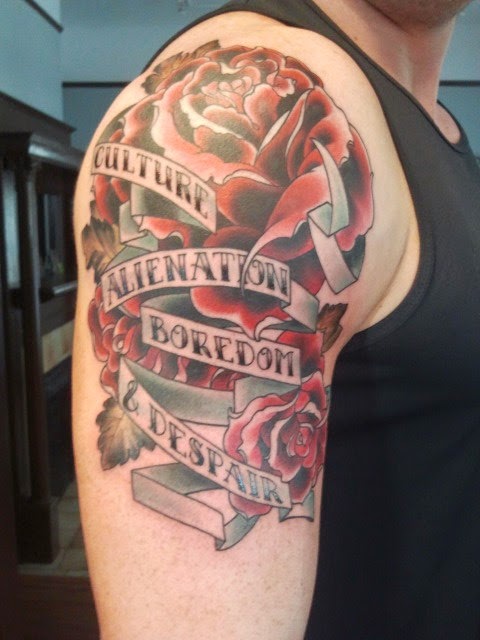


Quite a motley crew I'm sure you will agree! The first time that I saw the Manics I was astounded at the breath-taking lengths that so many of the people in the audience had taken with their appearance, and that, as much as the band themselves, had an enormous influence on my emerging butterfly personality. For whilst these shimmering ones were on the receiving end of many hostile glances from the more casual sections of the audience, mine were looks of sheer envy, and it was yet another of those life changing moments when I realised that for a couple of years I had not been anything remotely like true to myself, and that being clad in leopard print, feather boas and being incredibly trashy was a majestic, personal statement (basically a hearty "fuck you!") to the conformist masses of the world. And, suitably shaken out of his torpor, this admittedly a bit unusual but not unusual enough caterpillar went into a mental chrysalis, and almost overnight, began to metamorphose into the beautiful nocturnal butterfly I sincerely hope I have since become. And one of my greatest joys was when one of my closest friends, Pete, who was discussing a new band (it might have been The Killers, although I can't remember for certain) that he had seen the night before on Jools Holland, suddenly announced to his friends in the pub that we were all assembled in that The Killers were, just like Lydia and me, "a load of glam tarts," I knew that my transformation was complete. I had flirted with glam imagery before, whether that be Rocky Horror, Freddie Mercury or David Bowie, but had never had the courage to truly accept it as an integral part of my every day personality and persona. But now, thanks to Lydia, the Manics, and I must never leave them out either, Suede, I now truly was, to quote Pete once more, a proud as punch "glam tart!" Mission most definitely accomplished! And never let it be said that these type of things are shallow or of an unspiritual nature, for I can call on many authorities to back me up on this, whether it be the mystic Beat poet and writer Kenneth Rexroth, who once wrote that, "style is never just a matter of style, but the outward sign and garb of an inner spiritual state," through to one of my greatest spiritual mentors, Oscar Wilde, who enigmatically quipped, "It is only shallow people who do not judge by appearances. The true mystery of the world is the visible, not the invisible."
But, I digress! ...back to the Manics in concert!
The atmosphere at Manics's gigs are usually off the Richter scale, and there are two concerts in the past five years which stand out in my mind as particularly monumental, the first of which was at Manchester Apollo in 2010, not long after the Tories had formed a coalition government with the Lib Dems and had just begun their ideologically driven hate programme against public sector workers, the poor and the vulnerable. One of my main memories of that explosive concert is that if the energy that built up inside the hall that night could have been transferred to the outside world, it would surely have kick started the much needed revolution. It is a night I can recall vividly, as the outcome of the election had left me feeling increasingly anxious and angry, and when Nicky Wire dedicated 'The Masses Against The Classes' to the city of Manchester due to its playing such a prominent role in the founding of the trade unions, the atmosphere reached fever pitch. The closing 'A Design For Life', which Nicky introduced by saying that it was more important than ever, makes my eyes fill with tears even now when I recall its power that night, and when James gave the second verse to the audience to sing, and every single voice roared it back to the band, I thought I would break in two. I don't really know what kind of deep seated need it is that is filled by moments like these, but it was truly a religious experience. To hear all those voices singing that working class anthem with such passion obviously tapped into something primal (pagan?) in me, and it felt like we could literally have taken on the wealthy and powerful there and then, and brought the whole edifice down on their unworthy heads. And then, just when I thought my heart & soul wouldn't be able to take any more, the night turned from the political to the personal, and James, completely unexpectedly, started singing Frank Sinatra's 'The Summer Wind' over the rolling beat before the huge, final chorus. I can actually feel myself back in the Apollo as I write this, and I just wish I could describe adequately just how monumental this all felt. I had sang 'Summer Wind' myself years before and amidst the rush of adrenaline that was already no doubt surging through me at this point, I think I had what can only be described as an out of body experience. I was looking at the hall singing in unison, I could see myself and Lydia sitting beside me, looking unbelievably radiant & beautiful, and sparkling like The Prettiest Star, and all of a sudden, my Mum, and my Nain & Taid (who had all passed away by this time), and even my beloved dogs (also sadly long gone) that I had had when I was younger, were dancing around joyfully like young gazelles. And there seemed to appear all manner of souls around me, and they too were singing and smiling, and being as much a part of the intoxicating atmosphere as everyone else that were in the theatre. This may all seem a little far fetched but that is what the power of that moment did to me. What Freud would make of it all I am not so sure, but it is a moment that was as sublime as it was transcendental and it is one that I shall never forget, for as long as life remains to me. As the song then reached its climax, the Manics said their thank yous and goodbyes, only just audible above the deafening feedback and rapturous applause, and left the stage whilst I gradually & reluctantly came back down to earth. I am more than aware of the power of art to create this kind of experience, and I could reel off a whole list of works from off the top of my head that have allowed me to experience what in feminist theory is sometimes labelled 'jouissance'; that is, a form of pleasure or sexual rapture that combines mental, physical and spiritual aspects of a usually feminine experience (it's a good job that I'm not a man but a Boy Girl Space Creature!), which borders on mystical communion, explosion, effervescence and abundance. Works as varied as James Joyce's A Portrait of the Artist as a Young Man, seeing Stanley Kubrick's 2001: A Space Odyssey in the cinema, and hearing Debussy's Prelude a l'apres-midi d'un faune performed by a full orchestra have all had this astonishing effect on me previously. And on this magnificent occasion, and as with so many things in life, the timing was of critical importance. The combination of the terrible political situation in Britain at that time & the anger that filled the air in the North West because of it, an amazing old venue in the Apollo rather than some dreadful, vacuous arena, and a boisterous, passionate Northern crowd, all combined to make it an explosive evening. My personal situation of course will have contributed to my experience as well, but it was one of those absolutely priceless, few in a lifetime occasions when so many pieces fall perfectly into place like an invisible jigsaw puzzle. And I will in a future blog tell of another occasion when this happened for Lydia, who held onto Tim Booth's hand whilst they gazed into each other's eyes during 'How Was It For You?' at a James gig in Bournemouth, and when the emotion that they both generated was so intense and all-encompassing that they could have turned the electricity off and it wouldn't have made the slightest bit of difference as they could have powered the lights and everything else by themselves! Extremely rare & precious are such moments, and if you are ever fortunate to have one yourself, I would urge you to embrace it whilst it is happening with every ounce of your soul, as time will literally have no meaning whilst you are experiencing it and you will enter another, completely magical realm, which is increasingly difficult to do in these soulless, spiritually barren and hopelessly philistine times.
The atmosphere at Manics's gigs are usually off the Richter scale, and there are two concerts in the past five years which stand out in my mind as particularly monumental, the first of which was at Manchester Apollo in 2010, not long after the Tories had formed a coalition government with the Lib Dems and had just begun their ideologically driven hate programme against public sector workers, the poor and the vulnerable. One of my main memories of that explosive concert is that if the energy that built up inside the hall that night could have been transferred to the outside world, it would surely have kick started the much needed revolution. It is a night I can recall vividly, as the outcome of the election had left me feeling increasingly anxious and angry, and when Nicky Wire dedicated 'The Masses Against The Classes' to the city of Manchester due to its playing such a prominent role in the founding of the trade unions, the atmosphere reached fever pitch. The closing 'A Design For Life', which Nicky introduced by saying that it was more important than ever, makes my eyes fill with tears even now when I recall its power that night, and when James gave the second verse to the audience to sing, and every single voice roared it back to the band, I thought I would break in two. I don't really know what kind of deep seated need it is that is filled by moments like these, but it was truly a religious experience. To hear all those voices singing that working class anthem with such passion obviously tapped into something primal (pagan?) in me, and it felt like we could literally have taken on the wealthy and powerful there and then, and brought the whole edifice down on their unworthy heads. And then, just when I thought my heart & soul wouldn't be able to take any more, the night turned from the political to the personal, and James, completely unexpectedly, started singing Frank Sinatra's 'The Summer Wind' over the rolling beat before the huge, final chorus. I can actually feel myself back in the Apollo as I write this, and I just wish I could describe adequately just how monumental this all felt. I had sang 'Summer Wind' myself years before and amidst the rush of adrenaline that was already no doubt surging through me at this point, I think I had what can only be described as an out of body experience. I was looking at the hall singing in unison, I could see myself and Lydia sitting beside me, looking unbelievably radiant & beautiful, and sparkling like The Prettiest Star, and all of a sudden, my Mum, and my Nain & Taid (who had all passed away by this time), and even my beloved dogs (also sadly long gone) that I had had when I was younger, were dancing around joyfully like young gazelles. And there seemed to appear all manner of souls around me, and they too were singing and smiling, and being as much a part of the intoxicating atmosphere as everyone else that were in the theatre. This may all seem a little far fetched but that is what the power of that moment did to me. What Freud would make of it all I am not so sure, but it is a moment that was as sublime as it was transcendental and it is one that I shall never forget, for as long as life remains to me. As the song then reached its climax, the Manics said their thank yous and goodbyes, only just audible above the deafening feedback and rapturous applause, and left the stage whilst I gradually & reluctantly came back down to earth. I am more than aware of the power of art to create this kind of experience, and I could reel off a whole list of works from off the top of my head that have allowed me to experience what in feminist theory is sometimes labelled 'jouissance'; that is, a form of pleasure or sexual rapture that combines mental, physical and spiritual aspects of a usually feminine experience (it's a good job that I'm not a man but a Boy Girl Space Creature!), which borders on mystical communion, explosion, effervescence and abundance. Works as varied as James Joyce's A Portrait of the Artist as a Young Man, seeing Stanley Kubrick's 2001: A Space Odyssey in the cinema, and hearing Debussy's Prelude a l'apres-midi d'un faune performed by a full orchestra have all had this astonishing effect on me previously. And on this magnificent occasion, and as with so many things in life, the timing was of critical importance. The combination of the terrible political situation in Britain at that time & the anger that filled the air in the North West because of it, an amazing old venue in the Apollo rather than some dreadful, vacuous arena, and a boisterous, passionate Northern crowd, all combined to make it an explosive evening. My personal situation of course will have contributed to my experience as well, but it was one of those absolutely priceless, few in a lifetime occasions when so many pieces fall perfectly into place like an invisible jigsaw puzzle. And I will in a future blog tell of another occasion when this happened for Lydia, who held onto Tim Booth's hand whilst they gazed into each other's eyes during 'How Was It For You?' at a James gig in Bournemouth, and when the emotion that they both generated was so intense and all-encompassing that they could have turned the electricity off and it wouldn't have made the slightest bit of difference as they could have powered the lights and everything else by themselves! Extremely rare & precious are such moments, and if you are ever fortunate to have one yourself, I would urge you to embrace it whilst it is happening with every ounce of your soul, as time will literally have no meaning whilst you are experiencing it and you will enter another, completely magical realm, which is increasingly difficult to do in these soulless, spiritually barren and hopelessly philistine times.

Another gig that I remember with particular fondness was also in Manchester, this time at the Ritz, a wonderful and unusually small venue for a band like the Manics to perform in. This concert was at the close of the summer of 2013, and was just a few weeks before Lydia and I moved to a new life in the sunny South! Politically, the Tories' phony austerity measures were now being felt just about everywhere in the North, and the mood that night was quite different to the Apollo three years earlier, as an air of despondency & desperation had started to seep into every pore and even the sky seemed to have fallen in slightly after three years of cuts amid an increasing feeling of dread & fear of what the future held in store. The Manics had just released one of their quietest, most introspective albums, Rewind The Film, and to me it felt like the perfect timing had struck with eerie accuracy once again. My heart was full to bursting at this point as I knew a huge chapter of my life was closing in order for a beautiful new one to begin, and the songs that the Manics played that night from the new album were often reflections & elegies to the past, whilst also looking forward with hope and, to quote Bowie, A Better Future. But that wasn't all. The despondency that was strangling the North West because of the viciousness of the cuts was seemingly forgotten as every one sang those songs once again in unison with the band, but, this time, in a mood of ecstatic celebration. 'Motorcycle Emptiness' was the best I have ever heard it sound, and the defiance in the souls of each and every person in that audience was something I will treasure always, and each word was sung as if life itself depended on it. Yet again, the Manics had, or so it seemed, tapped into so many of the emotions that I was personally experiencing and it created another absolutely magical night. And then, one of the funniest things that I have ever seen at a gig had Lydia and me laughing till the tears rolled down our faces. It probably won't translate very well but I will recount it here in the hope that just some of the strangeness of what we saw will carry through. Have you guessed it? Well, dear reader, even rock icons it would seem, have to deal with those petty little rules that make life a bureaucratic misery for us all. Yes, that's right, the Manics Street Preachers tour bus, and Lydia managed to get a quick photo of it for posterity, had been issued with a parking ticket!

9. Futurology
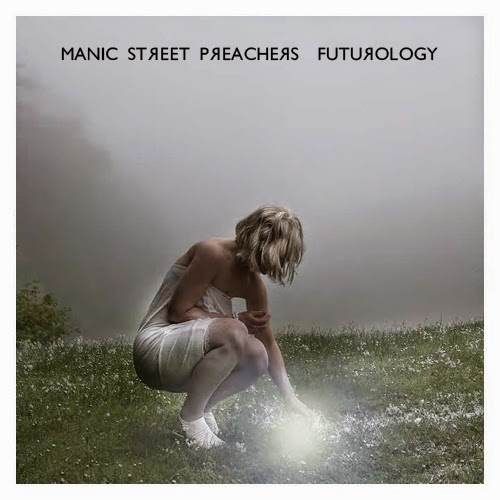
As some of my experiences that I have just described with the Manics could be difficult to follow, all that remains for me to say is how they stand in relation to my life now, and what part they will perhaps continue to play in the future. That is, providing Johnny in Mike Leigh's devastating film Naked isn't correct when he barks that, "none of us has a fucking future... the game is up and the end of the world is nigh, Bri!" Whatever the future has in store, and it's practically impossible to be optimistic seeing that we are facing another five years of hideous Tory rule, the Manics' latest album, Futurology, is an absolutely brilliant record, and if anything, shows that they are becoming more imperious with each passing year. It is a very European sounding album and its influences range from old (i.e., brilliant) Simple Minds, to Kraftwerk and Krautrock in general (thanks for the play list Mark). Lydia and I first listened to it whilst we were travelling in the car and it was the perfect way to hear it for the first time, as the themes and lyrics are quite often about travel and the hypnotic beats are perfect for motorway (autobahn!) listening.


On top of that, this year the Manics have been paying homage to Richey and have been playing their masterpiece album, The Holy Bible, in full in concert, one of which will be broadcast live from Cardiff on BBC Wales and which my friend Cornelius, the poet and vegan chef who commissioned me to write this blog and to whom it is dedicated, has kindly said he will be showing at his flat in what will no doubt be, a fabulous, sparkling, glittery & joy filled festival of all things Manic Street Preachers. I just hope he realises what an emotional rollercoaster he is letting himself in for!
For the rest, the Manics will always take up residence in a gigantic part of my heart. As an inpatient in hospital, the Manics will never fail to help soothe my soul, and when (as I no doubt will) I become furious with the Tories at the damage that they will no doubt further unleash on the lower echelons of society, the Manics will help to fire my anger so that I don't fall into complete despair and resignation at this appalling state of things. These are a couple of things that, in a world in which everything is so uncertain, I can be pretty much sure of.
And I am filled with pride when I consider the two number one singles that the Manics have had. 1998's 'If You Tolerate This Your Children Will Be Next', has a lyric that was inspired by British miners going off to Spain to fight fascism in the Spanish Civil War, and whose title alone remains a devastating warning to our generation and the generations to come, whilst the other, 'The Masses Against the Classes', has a spoken word intro by Noam Chomsky about the primary role of government being to protect property from the majority. Having number one singles with such anti-establishment messages is some achievement, and whatever amount of time I am able to spend with the Manics is definitely time well spent. I used to mention them quite a lot when I was in college, and one of my fondest memories occurred when one of my fellow students, who was a bit of a cynic and about sixty years old, came over to tell me something he had heard on the radio the night before. On this particular programme, the producers had sent out questionnaires to lots of established bands and singers asking them to give a few words of advice to any young listeners on the best things to do in order to become a successful musician. He said that all of the answers were of the usual cliched rubbish such as, get stoned, take lots of drugs and get wasted, etc, except for the answer which the Manics had replied with, which was, "join a library and get yourself an education." He said he would never have paid any attention previously as he thought all rock bands were the same but after all that I had said about the Manics, he had noticed this brilliant answer and how different it was to all of the others. We never had a great deal to say to each other most of the time so it was a nice moment. I have also just realised that I have not written any reviews of Manics albums in this blog, so perhaps I shall do that at some point in the futurology, as this post is long enough as it is!
Their profound influence on me has also had far reaching effects, much greater in its parts than simply being the music that I listen to & that has become a key ingredient in the soundtrack to my life, although that is obviously of enormous importance. They helped me to regain my confidence when it had all but disappeared, and reminded me that being dumb, however much it was praised during the 90s, is just that, fucking dumb, and that intelligence and the hunger to learn more is a beautiful, life-affirming thing, and, who knows if I would have ever had the courage to go to college and study for a BA Hons Cultural Degree if they hadn't have crossed my path when they did. They sent me back to brilliant iconic films I had watched and loved but had forgotten about such as One Flew Over The Cuckoo's Nest & Taxi Driver, and had me scuttling around trying to find ones they talked about that I had never heard of, such as Rumblefish and The Treasure of the Sierra Madre, and, in this they did what David Bowie, and, a lot earlier, even Frankie Goes To Hollywood had done for me, that is opened up new avenues of culture to be explored, which is a wonderful gift to give to anyone with an enquiring mind. For anyone wondering about why I've mentioned Frankie, the Welcome to the Pleasuredome album sleeve was laced with incredibly strange & decadent art, and had a huge list of works to recommend to an eager culture vulture such as I, and it was through them that I first heard the names of incredibly exciting & exotic sounding writers such as J.K. Huysmans, Baudelaire, Dostoevsky and J.G. Ballard, whilst they had lyrics influenced by Coleridge and even had quotes by Nietzsche scattered across their 12" singles... seriously amazing stuff, and although most of it was beyond me at the time as I must only have been about eleven!, the seed had most certainly been planted. And the 'Frankie Says...' T shirts that they had were absolutely fantastic... But once again, I digress... back to the Manics!
And so, I hereby and for all eternity salute the wonder that is the Manic Street Preachers! And if you can get BBC Wales on your TV player in early June, I suggest you crack open the cheap, tarnished glitter, don your best military & trashiest glam outfits, settle down with a bottle of wine, Tia Maria &/or a Babysham (or an Earl Grey in my case!), and watch the Manics perform The Holy Bible album in its entirety, and even if you don't love it, you will witness possibly the greatest alternative rock album ever made being played by a band in the capital of the country that they hail from, singing and playing every note as if their very lives depend on it. It is difficult to ask for more.
And finally, the Manics, for me, exemplify the idea that to take your life, and art, or whatever it is that you are interested in, deeply seriously, will always be the best option. Having the courage to stand up for your beliefs, even if, as Richey warns in 'Faster', that "If you stand up like a nail you will be knocked down," is a far better and more courageous choice than not standing for anything at all. And also, that it is actually perfectly possible to be enthusiastic, political, compassionate, and a million other things, and look absolutely divine (darlings!) all at the same time! And who in their right mind would want to argue with that?
And a few words, perhaps, to sum everything up?
"It was no surface, but all feeling."
And a few words, perhaps, to sum everything up?
"It was no surface, but all feeling."
Stay Beautiful.


