Friday, 27 August 2021

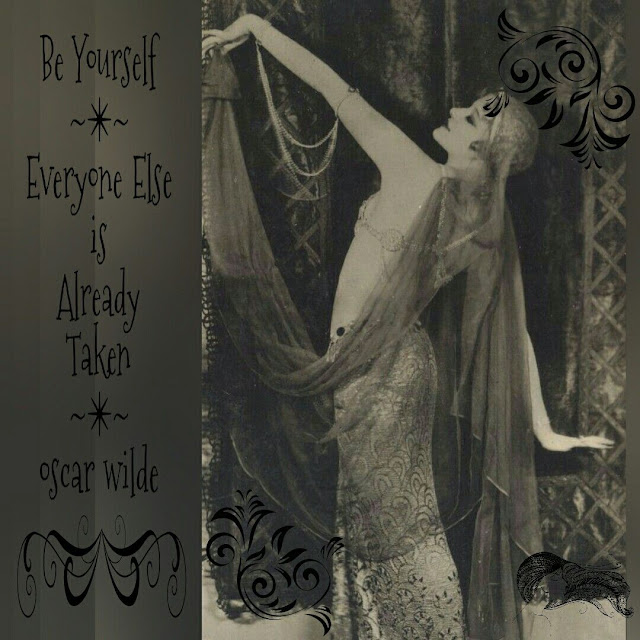
Live Your Truth With Style and Substance: Oscar Wilde's Influence on My Life


The Covid-19 pandemic has wreaked heartbreak and havoc across the globe, and although many people have suffered because of it far worse than I, the impact of it on my life has been enormous. As somebody who is clinically extremely vulnerable, I have been shielding now for almost eighteen months, and because of the risk of higher transmissibility with the latest delta variant, the CF specialists have advised me to continue to be extremely cautious with what I do, which means it will probably be some time yet until I can go to a concert or the theatre, or even meet with friends for a coffee, even though I have been double-jabbed. But despite this, and I am not ashamed to admit that at times my heart cries out to be able to do these things again, there have been silver linings. And one of the best I could have hoped for was being able to attend an online course at City Lit studying my favourite writer, Oscar Wilde. There was an added bonus as well, as the teacher was Julian Birkett, who I already knew from a European Short Story course that I had attended previously. To be able to read passages to the group, hear them read other passages, too, and then engage in conversation about Oscar's life, works, and beliefs was truly wonderful. Some of the responses to his works surprised me greatly (hearing one of your great heroes being criticised is never nice!), but it was fascinating to hear other people's opinions, and in many ways this helped me to crystallise my own thoughts about Oscar's philosophies on what makes life worth living. There were many sides to Oscar's views (his was far too big a personality to remain static in his thinking), and charting the changes of his views during his life was a fascinating process. I will attempt here to set down some of his most important thoughts and discuss what they might mean to us today, with extra regard and references to how they influence the way I approach life as well. So, without further ado, put some Debussy on the stereo or whatever device it is that you use to listen to music nowadays, prepare yourself a glass of absinthe, and come with me as we meander off the straight and narrow path and take a Walk on the Wilde side.


"The aim of life is self-development. To realise one's nature perfectly - that is what each of us is here for. People are afraid of themselves, nowadays."
- The Picture of Dorian Gray


1. In the Beginning

I can recall the moment I truly delved into the work of Oscar Wilde as if it were yesterday. It was back in the 90s and I had just finished a four month run performing in a play in London. I had travelled back on the train to Wales and although I was absolutely worn out, I was unable to sleep. In one of those moments where it seems like we decide what we are doing but perhaps there are influences beyond our control, my eyes rested on my bookshelf and my attention was drawn to the big blue hardcover edition that I had called The Works of Oscar Wilde. I opened it at random and fell upon the section entitled De Profundis, which is a letter that Oscar wrote whilst he was in prison to his lover, Alfred "Bosie" Douglas. I started to read and was so gripped that I read the entire one hundred plus page letter. By the time I had finished it was dawn outside and I finally managed to get to sleep with my head in a whirl. De Profundis still remains one of my favourite pieces of writing and from that moment I was a fully signed up member of the Oscar Wilde Fan Club. (I should have started one called The Green Carnation!) For it seemed to me that Oscar's life and philosophy were a revelation, and his work seemed to tempt and warn at the same time. Tempting because of his daring approach to how life could be lived, but also with the terrible warning of how easy, but disastrous, living an inauthentic life could be. I have this passage tattooed on my soul as a mantra:

"The supreme vice is shallowness. Whatever is realised is right."

How deeply this phrase penetrated my psyche and how badly did I need it, although I doubt very much that I was able to live up to its majestic wisdom at that point. But it had landed in my mind like a seed, and slowly but surely, over time, it began to bloom and I hope it is a phrase that I am now able to live up to and actually put into practice. I then explored more of Oscar's work and each find was a treasure trove of ideas, wit and wisdom. His fairytales brought tears to my eyes and stars to my heart. His essays on Socialism and Individualism echoed back to me my own political beliefs, but put so perfectly and in a way that I could never have done myself. His plays had me laughing down the aisles, and his style had me wearing a flower in my buttonhole before I could say "Wild Orchid." He has some intriguing and challenging views on an array of subjects, and it will be my pleasure to go through some of them now.


1. Influence

- Marilyn Monroe


"It wouldn't have happened without you. 
You filled me with a wild desire to know
 everything about life."
 - Dorian to Harry in The Picture of Dorian Gray.


In Oscar's novel The Picture of Dorian Gray, the whole notion of how people influence and are influenced by others is explored in great detail. In the novel, Dorian is an extraordinarily beautiful young man who is being painted by the artist Basil Hallward. Basil's friend Harry arrives at the studio and begins to enchant and confuse Dorian with his views. He tells Dorian how he has two of the most valuable things in life (beauty and youth), but how time is envious of these gifts and as his life proceeds he will lose them, grow old and eventually die. Harry tells him how, "The pulse of joy that beats in us at twenty, becomes sluggish, our limbs fail, our senses rot. We degenerate into hideous puppets, haunted by the memory of the passions of which we were too much afraid, and the exquisite temptations that we had not the courage to yield to." Dorian is so startled and horrified by the realisation of what Harry is saying that he sells his soul so that the portrait will grow old whilst he will stay young and beautiful forever. This has catastrophic affects during the novel as Dorian, now remaining young and beautiful, grows more callous and paranoid over time and eventually ends up murdering Basil. It appears at first glance as though Dorian's descent into this terrible deal with the devil is all because of Harry's influence, but Oscar explores how each character in turn has been responsible, and none of them are blameless, if there is such a thing in these matters. For instance, Dorian's good looks have completely bowled over the artist Basil, who has himself been irretrievably changed since meeting Dorian:

"He is all my art to me now... his personality has suggested to me an entirely new manner in art, an entirely new mode of style . I see things differently, I think of them differently. I can now recreate life in a way that was hidden from me before."

And it is not only Harry that has influenced Dorian, for as Dorian tells Basil, despite his good intentions it was Basil himself who was initially responsible for instilling vanity into his psyche, long before Harry came on to the scene. For all Basil's protestations about Harry and his intention to do the right thing by Dorian, this tangled tapestry seems to suggest that it is an inevitable part of human life that we influence and are influenced by others whether we intend to do it or not. And when we are influenced by others, is it really them that are influencing us? for as Dorian reflects after he has met Harry... "He was dimly conscious that entirely fresh influences were at work within him. Yet they seemed to have come really from within himself." Such is the mystery of life, darlings! Most of us I'm sure can reflect on the role of influence in our own lives. And as Oscar writes elsewhere:

"Even men and women of the noblest moral character are EXTREMELY SUSCEPTIBLE to the influence of the physical charms of others. Modern no less than ancient history supplies us with many painful examples of what I refer to!"
- The Importance of Being Earnest


Ahem... Indeed!


2. The Visible/Invisible World


"The harmony of soul and body - how much that is! We in our madness have separated the two, and have invented a realism that is vulgar, an ideality that is void."
 - Basil in Dorian Gray

"It is only shallow people who do not judge by appearances. The true mystery of the world is the visible, not the invisible."
- Harry in Dorian Gray

"There is not a single deterioration of the body which I must not try and make into a spiritualising of the soul."
 - Oscar in De Profundis

"Flowers are a symbol of the beauty that in all lives lies dormant and may be brought to life."
 - De Profundis


As the above quotes show, Oscar gave voice to very different views when it came to the visible and invisible world. As an aesthete and an artist, he was, (like me)!, in thrall to the beauty of art, the natural world and the senses. During one class at my course, he was described as being "probably an atheist, but a person who loved mysticism, too" and in many ways that's how I also see him. In his earlier years he leant more heavily towards the view taken by Harry in the quote above, but as well as this no doubt being a product of the energy of youth that flowed within him, it was probably also because this philosophy was the most scandalous and rebellious at the time (and probably still is now) as it goes against so many commonplace sayings that we have inherited through religious morality, etc. And of course, what Oscar really disliked and had his sights trained on was hypocrisy:

"The supreme vice is shallowness. 
Whatever is realised is right." 

And in Victorian society (as it remains in our own), hypocrisy was rife. I believe that Oscar, for all his faults, had a kind and generous heart, and what he really believed was that both the invisible and invisible worlds were actually intrinsically linked, and shouldn't be separated, as one was a reflection of the other. As he writes in De Profundis: "What the artist is always looking for is the mode of existence in which soul and body are one and indivisible; in which the outward is expressive of the inward: in which form reveals." This is the essence of Oscar's belief, in my opinion. He adored the physical world because for him it represented the Platonic ideal of Beauty, and humans are the material representations of these ideals. And it is not only Beauty. Joy is also an ideal that is represented. And this is, for Oscar, a spiritual quest also. The aesthetes love beautiful art and are enchanted by beautiful objects because they represent THE ESSENCE of something beautiful. I would surmise that their suggestion is that if you worship Beauty, the more refined you will become and this in itself is a spiritual quest. It is nigh on impossible to do full justice to this argument here as there are so many twists and turns, but it is certainly not the hedonistic, thoughtless idealising of Beauty that is mainstream now. It has nothing to do with vacuous celebrity magazines and butchering yourself through plastic surgery, but has everything to do with the ancient pagan idea of glamour, mystery and sensual freedom. And Oscar, in effect, was attempting to do here what he was to do with many other things that at first glance appear to be total opposites, and that is to bring them together. He also knew that Life is not as simple as people like to believe, and that any mode of life that is too one-sided can lead to problems. Perhaps he never summed this up in a more succinct way than when he wrote: "Nothing can cure the soul but the senses, just as nothing can cure the senses but the soul."


3. Love & Romance

David Bowie & his wife, Iman

Keith & David in Six Feet Under

- Auguste Rodin, 
The Eternal Idol (1890-93)


- Gustave Klimt, 
The Kiss (1907-08)


"A few minutes with somebody one worships means a great deal." - Basil in Dorian Gray


"The joy of love, like the joy of the intellect,
 is to feel itself alive."
 - De Profundis

"Love is fed by the imagination, by which we become wiser thank we know, better than we feel, nobler than we are: by which we can see life as a whole: by which, and by which alone, we can understand others in their real as in their ideal relations. Only what is fine, and finely conceived, can feed love. But anything 
will feed hate."
 - De Profundis

"How utterly unromantic of you!"
 - The Importance of Being Earnest

"Ultimately, the bond of all companionship, whether in marriage or friendship, is conversation, and conversation must have a common basis." - De Profundis

"To be in love is to surpass oneself."
 - Sibyl Vane in Dorian Gray


Ah! This is where Oscar really makes my heart sing. For the idea of Romance in great art and literature, and indeed, life itself, is not simply about Romantic comedies, champagne and vegan chocolate cake. (although they all are, of course, simply wonderful!) But much more than that, it is also a belief in an approach to life that leaves you incredibly vulnerable, but which also opens the heart and soul to the wonder and beauty of existence, and human relations in a spectacular, Revelatory way. For being a Romantic is a way of being in the world, and it is not about just having one date a year for an anniversary or on Valentine's Day, for example, but a complete way of seeing the world, and of feeling about everything that exists. It makes one more sensitive to nature, to music, to the arts in general, and helps you to see people in a more subtle way, "in their real, as in their ideal relations." As I've allowed the ideas of Romance to take on deeper meaning in my innermost self, it has encouraged me to enrich my perception of people and the world immensely. For instance, I wonder if many people think of their partners in the way I think of my wife, Lydia. For each time I look at her, I am intensely aware of how she has extraordinary elan vital (life force) and has elements of Greek myth in her innermost being, in brilliant abundance, and yet, they are so naturally a part of her very essence that I don't think she herself is that aware of them. To her it's as natural as the colour of her eyes. But I witness her multiple selves every day. For instance, as well as her day-to-day self, the kind of self we all have, in Spring she is the effervescent goddess of Spring, Primavera; in Summer she's a Mermaid of the Sea, and in Autumn she is the mesmerising witch, Lilith of Halloween. In her career and learning she always makes me recall the goddess of health and rejuvenation, Hygeia, and when she's feeling particularly cheeky, she's as playful and full of mischief as Euphrosyne or Iambe, among a myriad of others. And if it wasn't for the ideas of Romance and Romanticism, I doubt very much whether I would have ever learned to be able to view her and life in such a rich and poetic way. And let's face it, men are not exactly encouraged to think in this way, are they? It's not the kind of thing you learn in school or from mainstream media, is it? It's more about fuel guzzling cars, muscular strength, business, conquest, sporting prowess and porn, isn't it? But that view of things is based firmly in Reality and to me it is incredibly vulgar. Romanticism as a philosophy wants to do far more than that. It denies nothing about the probable facts of life, in that there is no creator, no Heaven where we go when we die and meet up again with loved ones we've lost, faces up to the terrible knowledge that we and everyone and everything we love will eventually pass away, and acknowledges that much of life is down to sheer chance. But it sees all of this, refuses to deny these harsh realities, yet still encourages us to embrace Life in all its sheer mystery, uncertainty, euphoria and pain, and then makes it its mission to encourage us to drain every last drop of joy and Beauty from the life that we are given. It's as if it wants us to see deeper than the surface, and to plunge into the unconscious of not only ourselves but the universe itself. To try and figure out why something rather than nothing exists. To see the forces and drives behind everything that lives, and how the myths of gods and goddesses tell us fundamental truths about ourselves and existence. It also understands that many of our natural drives are animal instincts, and that the only way to make them noble and spiritual is to make them as artistic as possible. As Oscar writes in Dorian Gray, "Romance exists through repetition, and repetition converts an appetite into an art. We can have in life but one great experience at best, and the secret of life is to reproduce that experience as often as possible." For many of us, it is the best response to life we have. And it is certainly better than Denial, the scourge of our time, whether that be about Global Heating and the Climate Emergency, Covid deniers, or the anti-vaccine brigade, who so desperately want Covid not to exist - so they can go about living the way they were able to do previously - that they will even go as far as denying its existence, or decide that it's "only flu" or a global conspiracy. But as Oscar also knows, Denial is in fact a terrible personal trap. And when it comes to Love, Romance and Desire, it is not only Psychoanalytic thought but also the likes of poet William Blake who would agree with Oscar, no doubt prefiguring Freud when he writes how, "We are punished for our refusals. Every impulse that we strive to strangle broods in the mind and eventually poisons us... The only way to get rid of a temptation is to yield to it. Resist it, and your soul grows sick with longing for the things it has forbidden to itself."

With Oscar's help, I dearly hope I've learned to see the world for the genuine mystery and miracle it is. And I'm so glad that if anybody were to accuse me of being "too romantic", I would take it as a sincere compliment and it would make me think that perhaps I've gone about things in the right way. We have a quite enchanting array of bird visitors to our little garden (including a lame wood pigeon with a clubbed right food that Lydia christened Byron and who is an absolute inspiration to us), and a quarrel of sparrows, who, when they sing in unison (the Sparrow Chorus, as we call it) are simply breathtaking. These pleasures are so simple and remote and alien to the neoliberal capitalist view of the world as to be almost their polar opposite. If Margaret Thatcher had ever experienced it, I would guess that her only response would have been to see if money could be made from it (probably by caging the beautiful sparrows, and Byron would probably have been denied disability benefits and left to rot). How glad I am that I don't see, hear and experience the world in such a desperately limiting, anti-life way. And then there is my wife, Lydia. We've been together for over twenty years, been in shielding together for eighteen months, and yet she still makes my heart skip a beat every single day and we can still talk for hours on end about every topic under the sun and laugh together till the tears run down our faces. I couldn't have hoped for anything more.

- David Bowie and Iman

- Lydia & Yours Truly!


"They were more than handsome... they were happy. For them, Romance was not killed by reality. They always felt young." 
- Lord Arthur Saville's Crime


4. Empathy

- Alexander McQueen, Chess (2005)


"Are we actually in control? He saw the crooked-back forms of poverty and eld. Were these children of sin and misery predestined to their end? Were they, like him, merely the puppets of a monstrous show? Was there no escape? Were we no better than chessmen, moved by an unseen power? And yet it was not the mystery, but the comedy of suffering that struck him; its absolute uselessness, its grotesque want of meaning. He was amazed at the discord between the shallow optimism of the day, and the real facts of existence."
 - Lord Arthur Saville's Crime


I doubt very much that empathy is a word that many people associate with Oscar Wilde if they think about his work and ideas. And yet it is a huge part of Oscar's philosophy of life, whether that be in a fairytale such as The Happy Prince or the extraordinary letter that he wrote in prison, De Profundis. For all his wit and adoration of scandal, Oscar was deeply aware of the vicissitudes of life and I would suggest that at the deepest level, he was fully aware of our interconnectedness and the importance of understanding and compassion in the way we live our lives. Of course, he failed many times, for he, like each one of us, is human, and he hurt many people because of his amour fou (mad love) for Bosie, none more so than himself. When he was released from prison, he campaigned tirelessly for prison reform, informing the world of the sadistic cruelties being inflicted on already broken prisoners, and even children caught in the prison system. And on a personal level, he even wanted to console Bosie, even though it was Oscar himself who was languishing and suffering dreadfully in jail. I think he knew only too well that fortune has all of us in its grip, and when misfortune arrives, the only way we can retain our humanity is to feel empathy and try and relieve another person's misfortune and suffering when it inevitably falls on them. Not something that sits well with neoliberal individualism, though, of course, hence Boris Johnson saying, "let the bodies pile high" so that business can carry on as normal during a devastating global pandemic. It is also worth noting that Oscar was also more than aware that life works in mysterious ways. For it wasn't only his selfish and thoughtless behaviour that led to his life falling apart disastrously, but his supreme kindness also. For after finally managing to separate from Bosie after another of their ferocious scenes, a few days later Oscar read in the paper that Bosie's brother had died in a tragic shooting accident. Out of compassion for Bosie and his family's suffering, he helped in whatever way he could and he and Bosie were soon after reconciled, and it wasn't long after this that Bosie's father started the campaign of hate against Oscar which led to him being imprisoned. Reflecting on this whilst in prison, Oscar wrote in De Profundis: "The gods are strange. It is not of our vices only that they make instruments to scourge us. They bring us to ruin through what is good, gentle, humane, loving. But for my pity and affection for you and your family, I would not be weeping now in this terrible place." What a conundrum this life we live is. But Oscar knew only too well that empathy is a vital ingredient if we intend to live our best lives, as without it, we are likely to turn into monstrous, insensitive capitalist machines who would prefer that "the bodies pile high" rather than try and do everything to prevent that from happening. And of course, nothing has changed since Oscar's day in that how we live (and, indeed, whether we will still have a planet to live on) as a society depends entirely on us not only focusing on ourselves, but on thinking of the larger world and changing our behaviour for the greater good, despite what the far Right, anti-vaccine, non mask and Climate Emergency deniers say.

"He had to choose between living for himself and living for others, and terrible though the task laid ahead of him was, yet he knew that he must not suffer selfishness to triumph over love. Sooner or later we are all called upon to
 decide on the same issue - of us all, 
the same question is asked."
- Lord Arthur Saville's Crime


5. Conclusion: What Makes a Good Life?


- Two other great inspirations: 
Tim Booth & his wife Kate Shela


"I did it to the full - as one should do
 with everything one does"
 - Oscar in De Profundis

"The only people I would care to be with now are artists and people who have suffered: those who know what beauty is, and those who know what sorrow is: nobody else interests me. Nor am I making any demands on life."
 - Oscar in De Profundis


When we studied De Profundis in class, I think I surprised a few people by telling them that De Profundis is a text that I often turn to when I'm feeling sad and low, and the amount of times it has helped to get me through scary, sometimes terrifying hospital admissions are so many that I've lost count. It is a sombre piece of art, but above all, for me, it always helps me not only as a balm, but for its sense of hope. I think I've described it sometimes as my Bible as it is so full of wisdom, love, compassion and grace. Oscar describes how he suffered so terribly in prison that he longed to die. But slowly and surely, he looked deep inside himself and found that he could emerge and love life as much as he had ever done, only in a different way. Our reasons for feeling distraught are obviously very different. But when I've been in hospital or at home, coughing up blood and desperately hoping that the IV antibiotics will stop it happening, whilst all the time hoping also that my CF hasn't turned a corner and that I might not have long left on this beautiful planet, as an atheist, I have found no other text that can help at that time more than De Profundis. There is such wisdom contained in its pages. About life, love, loss, beauty, death... it touches on every important subject. And it has helped me (and still does) remember that every moment is precious and that we should live life to the full whilst not giving in to the hypocritical moralising voices around us, have the courage to not deny the realities of existence, and learn to accept that eventually, everything, everywhere, ends. And in these insane times, as I enter my 547th day of shielding and we face a world with Covid, Covid deniers, Climate Emergency and heaven knows what else, Oscar's words seem more prescient than ever. But how else has Oscar inspired me and our modern culture?

- Oscar Wilde Pop Art 
by Ramsdale


Anyone who has read my previous blog posts will know that I adore the glam element in music. And for me, Oscar was the first glam pop star. Without him, I doubt if Bowie, The London Suede, Roxy Music, Manic Street Preachers, St. Vincent and a whole array of artists would have been the way they are. For in their work (and personal lifestyles) they have brought together two ideas that are usually thought to be in opposition and proved it is actually possible to have both: style AND substance. Oscar Wilde has been a huge influence on this philosophy, and his life and work showed that it was perfectly capable to have depth and meaning, and great style, and that they didn't have to be exclusive. He was also a dynamic rebel, who loathed the hypocrisy of the religious and the Puritan moralists. Whenever I've talked to other people who also consider Oscar to be a hero, they all talk about how he encourages us to be authentic, as well. And how badly does our current culture need people to walk it as they talk it? If everyone who quoted Buddhism and such then behaved in the way they talked, how much better the world would be. But people in the main just want to LOOK as if they are fine, compassionate, unselfish individuals. In reality, they usually don't care about anything other than themselves. And this is what Oscar despises: "Live Your Truth," would be his message, and if you behave selfishly, don't then go and pretend on Facebook and Social Media that you're a Patron Saint of Compassion and Empathy.


Politically also, Oscar has made a huge impact. He is an LGBTQ hero (and martyr) to many, and his revolutionary ideas about Socialism would still have many a Tory hurling their copy of Oscar's The Soul of Man Under Socialism essay at their servant's wall in an apoplectic rage. For as Oscar writes, "The proper aim is to try and reconstruct society on such a basis that poverty will be impossible... Under Socialism, there will be no living in fetid dens and bringing up unhealthy children in the midst of impossible and absolutely repulsive surroundings. Each member of the society will share in the general prosperity and happiness of the society."


- Spud in T2: Trainspotting (2017)


And finally, wherever possible, he urges us to love life in all its strange wonder and baffling mystery. As Peter Shaffer writes in his play Equus, in a line that could quite easily have been written by Oscar himself: "Worship... Worship all that you can see. And then more will appear." This is the essence of Oscar's philosophy in my opinion. And because of life's strange vicissitudes, we should tread carefully whilst fully embracing the joys that we are given as a gift to be treasured. And a final thought to leave with you with, for now, dear reader, before we meet again. Would you like to know something extraordinarily uncanny, something that sent a shiver racing up and down my spine when I discovered it? It was quite clear to both Lydia and myself when we met that there was an intense connection between the two of us, and it was almost as if we intuitively knew that we were destined to have a very important role in each other's lives. Imagine then, if you can, the thrill that seemed (and still seems to me) to suggest that otherworldly influences were aligning with the stars to bring us together when I realised that my literary hero, Oscar Wilde, actually shares a birthday with my very fine lady herself! It stunned me then, and it stuns me still now. Who knows if these kinds of coincidences have any meaning, but I personally take it as a very, very sure sign, that somewhere in the Great Beyond, the moon was organising the tides and the spheres in a particular direction, and that it was clearly written in the stars that Lydia and me would meet and have the relationship that we do. It certainly makes perfect sense to me. And although I can't for one second believe myself to be An Ideal Husband, I am certainly more than aware of the sacred bond between us and I try to be the best life-partner than I can possibly be, and I try to help Lydia fulfil her dreams and hopes as best as I can, just as she always does for me. And if I'd been given the choice of who I would spend almost twenty months shielding with during a global pandemic before it started, and with perhaps many more months to come yet, she is the one I would have chosen in a heartbeat.

I still also try to recall Oscar's words about being content with having little if I start to get too despondent about how much I am missing being able to do the kind of things I mentioned earlier: meeting friends for coffee, going to the theatre or the cinema, for example, and although I'm already very used to having to forego things I would adore to do because of my CF, the pandemic has taken things to an entirely different level. But I have my imagination, and as I write this, I have the music and ambience of The Gold Room at the Overlook Hotel from the film The Shining playing 1920s music in the background on You Tube, which at least helps give me the illusion of being a part of the world, and it actually feels rather splendid. I have a marvellous cup of Darjeeling tea in front of me to savour once it's cooled enough to drink, and I recall what Oscar wrote in De Profundis when he was preparing to leave prison and trying to imagine what the world might look for him when he was released, knowing that he would be practically broke and considered to be a pariah to the society he once adored: 


Indeed.

And so, thank you to you all for reading my blog on Oscar Wilde and how he has influenced the way I respond to the world. I hope you are all having a lovely Summer during these extraordinary times that we are living through, and I will leave you with a few more fine words from the great dandy and wordsmith himself. And until next time, I remain, as always,

Your Nocturnal Butterfly. xxx


"It is sweet to dance to violins,
When love and life are fair,
To dance to flutes, to dance to flutes,
is delicate and rare." 
- The Ballad of Reading Gaol

"Live! Live the wonderful life that is in you! Let nothing be lost upon you... Be afraid of nothing." - Dorian Gray

"What gods do you worship? Or do you worship any gods? There are those who have no gods to worship. The ones who wear long beards and brown cloaks have no gods to worship. They argue with each other without realising 
that the gods laugh at them." 
- La Sainte Courtesan

"The Ghost made me see what life is, and what Death signifies, and why Love is stronger than both."
- The Canterville Ghost


Sunday, 16 May 2021

Glasnost: Art & Nostalgia Series: Online Indie Facebook Group Challenge

An online Indie Facebook Group recently challenged fans to send in humorous art works with themselves as the covers on any relevant band's records. My delightful lady is quite a big fan of the old Blur Boys and Girls, so here was our contribution, one which garnered much appreciation, I probably don't need to inform you! 


Sunday, 7 March 2021

Glasnost: Art & Nostalgia Series: Suede Fan Site Community Singles/Album Cover Challenge

The online Suede Fan Site community recently asked fans if they would like to reimagine and create their own versions of the band's singles and/or album covers, and my good lady and I obviously were only too happy to oblige. The best ones were published on their Twitter account and these two that we submitted were included:


Suede, 'The Wild Ones'


Suede, - 'Coming Up'


Saturday, 13 February 2021

Glasnost: Art & Nostalgia Series: "Snooker Sunday: Etude in Red", Country Life Magazine, 2018

Nostalgia is a huge part of life at the moment. Here's the first in a series of pictures of my very fine lady that have been published in various productions over the last few years.

'Snooker Sunday: Etude in Red',
 Country Life Magazine, 2018:


- xx

Sunday, 31 January 2021

Some Concert History

This questionnaire seems to be doing the rounds on social media and blog land currently, so here's my concert history.

First concert: Bucks Fizz

Last concert: An Evening of Music and Conversation with Nick Cave (June 2019)

Best concert: James in 2016. Tim Booth came into the auditorium and sang Just Like Fred Astaire whilst holding mine and Lydia's hands. And it was on our wedding anniversary.

Worst concert: Ian Brown (supporting the Manics)

Loudest concert: Hanoi Rocks

Seen the most: Probably James. But the Manics and Echo & the Bunnymen would be very close, too.

Most surprising: The Proclaimers

Wish I could have seen: Queen, Frank Sinatra, Billy Mackenzie/The Associates, Madonna in her imperious phase (1985-92)

Next concert: A pipe dream, currently. Who knows if this situation will ever change.


Friday, 8 January 2021

A Few Thoughts on How We Now Listen to Music


It's been something of a surprise to me to see just how many people there are who have needed the biggest crisis this country has seen during most of our lifetimes to actually start posting things on social media about how important listening to music is. I was & still am slightly flabbergasted by this. I know that up until a few weeks ago we lived in extraordinarily busy times (and time is money, right?) but it still surprises me how much has changed in the way people listen (if they do at all) to music (and make time for real art - not entertainment - in general). Music has been one of the most important things in my life since my very early days. Growing up, it was about learning, rebellion, opening my eyes to possibilities, discovering how other people experienced the world, poetic lyrics, romance, love and New Gold Dreams. The big craze now, of course, is music that 'heals' or promotes "well-being", which makes me wonder when life became all about well-being in the first place. Of course well-being and health is the greatest gift anyone can possess, and I have nothing but profound admiration for health workers, doctors and people who are helping and treating others through psychology and Ancient Chinese Medicine, for example, as this is a beautiful thing to do. But my gripe is with the people who are now bringing music into this mix, as music is one of the few places left where the imagination is free to explore different, often hedonistic realities. This situation actually reminds me of a great couple of lines that Robin Williams' character in Dead Poets Society says to his students:
Robin Williams in Dead Poet's Society (With images) | Dead poets ...

To which I would also add music. 

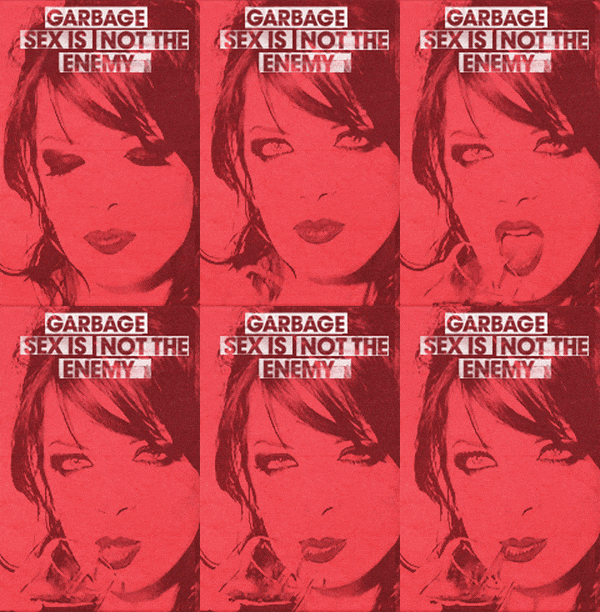
I guess some of this change probably boils down to class. From the 1960s onwards, it's generally been the middle class who have favoured the "well-being" approach to the arts, favouring wholesome books, songs and films over anything that was ecstatic or touched with the daemonic, and the biggest contrast in listening habits came after the hippy movement had been in its prime. For while the middle classes settled down on their bean bags and became expert lay practitioners of Buddhism whilst listening to bands such as Jethro Tull, and Hawkwind and the like, who had preposterous album titles such as Warrior on the Edge of Time, or Yes with the equally nauseating Tales from Topographic Oceans, in working class and lower class communities, listeners instead wanted escape from their sociologically trapped lives, or more particularly, they wanted escape and excitement, and this was to be found principally in the adrenaline inducing glam and rock music of the early 70s, through to the blazing "do it yourself" excitement of punk, to the sparkling, hedonistic, whole body eroticism of disco that surfaced at the end of that era through to the existential angst of post-punk. But it seems to me as if music is now being hijacked by the do-gooders who want to promote the idea of wellness at the expense of music's key Dionysian characteristics of euphoria, excitement, danger, sensuality and rebellion. Do you think Freddie Mercury would have wanted his music to be used to promote "well-being"? I think Freddie would have hoped that his music made your life either, a. more enchanting or, more likely, b. made you want to sing and drink and cry and then dance and have transcendent, earth-shattering sex. (Which actually sounds like a prescription for well-being to me, although I don't see any posts from Spiritualists or Buddhists suggesting that people should put a sultry Queen playlist on, and then go and have mind-blowing, consciousness expanding sex whilst listening to it, even though this could surely be classed as promoting well being at its upmost, and relieving stress at the same time.) Bowie openly admitted in the early 70s (although he was a tease with a gigantic heart and soul so may well have been kidding us) that he wrote and sang only to please himself, but he was overjoyed that his music and performances helped people break down the limitations of the personality they had and that he somehow helped them to open their minds to explore different possibilities inside them. The Manic Street Preachers have an energy that could start a revolution if it could be transferred outside the concert hall. Tim Booth and James would have us all diving under waterfalls and making love to the rhythm of the trusting tides whilst listening to the sound of moons calling. Shirley Manson of Garbage would have us all embrace our inner Queer whilst reminding us that Sex Is Not The Enemy whilst informing her female (and male!) devotees that they should never be shamed into not exploring and celebrating their Supervixen (Aphrodite/Venus) side. And then there's Donna Summer, who serenades us with arguably the greatest 12" record ever made, a paean to slow dancing and sensuality (and probably much, much more!) that lasts for almost fifteen minutes, fifteen minutes of ecstatic euphoria that we could probably all access if we could only let go of our egos, in a song so simply but so profoundly titled: 'Love to Love You Baby'. Bronski Beat's 'Smalltown Boy' showed that escape from narrow minded, bigoted small town communities was possible and that a life with people who wanted to live in a different way with different values was just a train journey away. Country Musicians and sultry Torch singers shared their intense longing and searing tales of love, grief, heartache and eventual rebirth, like a butterfly from a chrysalis, bruised and torn but perhaps stronger for it, and showed us it was possible to survive and emerge from the other side of loss as well. And, last but certainly not least, Madonna, the Bad Girl herself, who wants to Dress You Up in her love, and through whom came the command to all of us who have an element of the blushing wallflower in our make up: Express Yourself! And this is merely the tip of a wondrous musical iceberg. But what do people promote & listen to in the main now? Music to apparently heal to, with posts on social media now reminding us to 'deep listen' to A WHOLE ALBUM (Oh! the shock!) as this might be of help during this extremely difficult time. This is all very noble in its way, but dear, oh dear, have we really reached the stage where people need to be REMINDED to listen closely? I'm glad to say I've been deep listening to music all my life. Not just pop, cabaret and rock music, but classical too. For if you read the lives of the composers they were just as mad, bad and dangerous to know as any modern rock or pop star, and their music expressed deep emotions ranging from burning desire to hellish fury and devastating melancholy that could never be reduced to "wellness music." For most of the artists I've mentioned here, and their listeners, their music, and Art in general is not a separate realm where they go and hide from life for an hour or so, but rather, it is a constant spiritual image of life itself, where life is made more intense, more colourful, and more alive, and where every ecstatic experience is heightened through it. So, please, spare me this "music that promotes well-being" nonsense. Music has, and will continue to inspire, devastate, enrich, soothe,  romanticise and sensualise my experience of this crazy little thing called life, and that will be the case throughout this terrifying period, and hopefully, after the storm has passed, too, whenever and however far away in the mists of time that may be.


"The levels of hell are filled with the virtuous."
- David Byrne (Talking Heads), The New Sins


Push It Shirley Manson GIF - Find & Share on GIPHY

Sunday, 6 December 2020

On Being in an Indie Power Couple, No.1: Nick & Susie Cave

"And so if you have a good indie-power-couple story, go ahead, share it. share as many indie power couple stories as possible!"
amanda palmer x


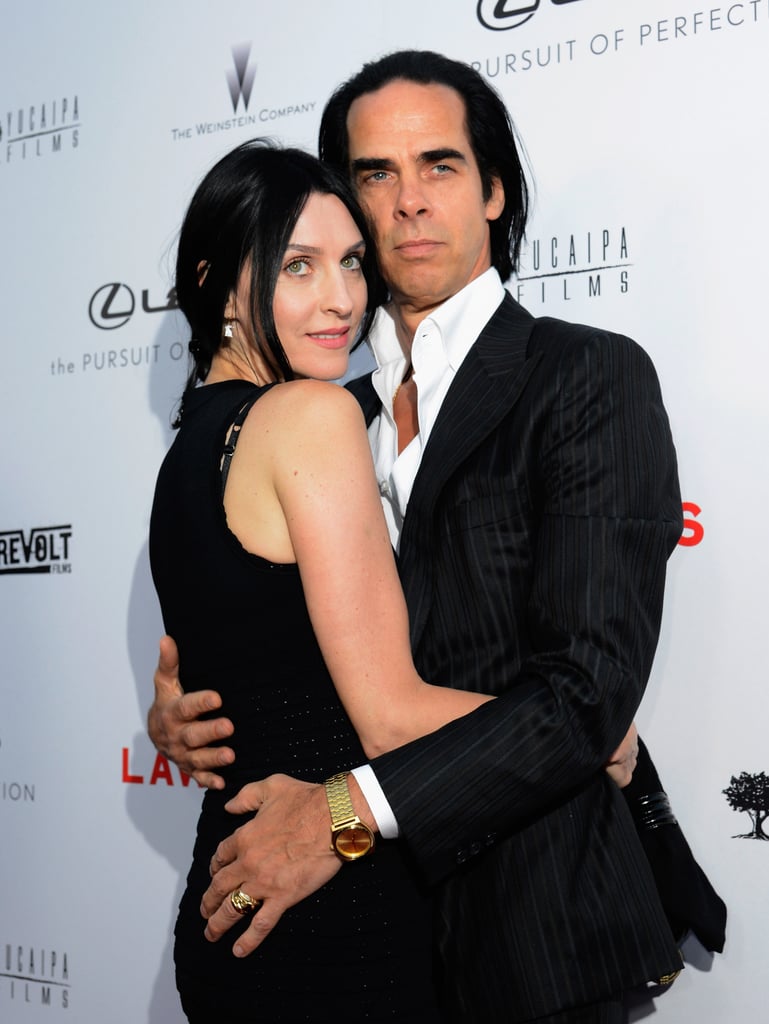
I recently came across this lovely article by Amanda Palmer entitled 'On Being in an Indie Power Couple' in which she invited other people to explore their favourite, most inspiring Indie Power Couples, as well as celebrating their own sense of being in an Indie Power Couple, if they felt they were part of one. This whole idea began because of a Twitter post in which somebody described Amanda Palmer and Neil Gaimon as being an Indie Power Couple, which then caught her attention and which then grew and grew as people began to reveal their Indie Power Couple stories. And I have to admit, this Indie Power Couple idea sent my imagination into overdrive as I feel I've learned a great deal about relationships and how inspiring they can be from my musical and artistic heroes. The first, and probably most informative relationship that I first witnessed, was the incredibly beautiful and loyal relationship my Nain & Taid had. They were married for 65 years, and the care they had for each other and the way they respected each other taught me something incredibly profound. Although they probably couldn't be described as an indie power couple, oh boy did they adore and support each other. As I got older, I started noticing things and learning about how others saw and valued their relationships, and, as a fascinated observer of the human animal in all its strange and wonderful behaviours, this started to interest me enormously, too. It was quite strange for me, though, as when I entered my late teens and headed into my early twenties, most of the people I knew didn't seem to prioritise romance or their relationships. Most of my friends who happened to be in relationships usually played down their affection for their partner and I also noticed that the next generation up seemed to have what can, at best, only be described as relationships of convenience. The women would moan about their men constantly and would only get dressed up in the hope of catching the eye of anyone other than their supposed fella or, even worse, make any excuse under the sun so as to be able to spend as little time with them at all. And in turn, the chaps would refer to their wives/girlfriends as the "ball and chain," who they were delighted to be away of from for a couple of hours so they could get down to the real fun of ogling other women whilst talking about their own current partners with disdain. Why on earth would anyone choose to live in that way was my immediate reaction to all this. And fortunately, I had different guides to call on who offered an enchanting alternative, and who were ready to come to my rescue. There were, of course, the Romantic poets I came to adore, who placed love & sex & sensuality & connection as something sacred & miraculous in the human universe, in fact one of Life's greatest gifts, and wrote about the life changing and enriching experience of being in love. And they wrote passionately of the importance of refusing to be with or stay with someone out of convenience, particularly writers such as Mary Wollstonecraft, as in most of the cases in their period of history from which they were writing about, was from the viewpoint of women. There were others also, who I will talk about in future blogs of this series, such as David Bowie, who wrote and sang of Romance in a way that echoed directly the feelings in my own heart, especially once Lydia and I began courting, and who always insisted that his wonderful marriage with Iman, not his successful records, was the thing that he was most proud of and thankful for having in his life. Bowie's gentlemanly, dandified stance on his marriage to Iman oozed grace and dignity, and showed me how glorious and meaningful a relationship can truly be. The obvious sizzle & frisson that quite clearly existed between them also showed me that the boring old adage that long term couples can't find each other sexually alluring after many years together to also be absolute twaddle. (That was a relief! wink, wink!) But, for this first instalment of my 'On Being in an Indie Power Couple' series, I want to focus on another of my favourite artists, Nick Cave, and his wife, the model & clothes designer, Susie Bick. For so many reasons, when I reflect on it, they are definitely in the 'On Being in an Indie Power Couple' bracket, and here's just some of the reasons why I find their relationship so inspiring.


Nick Cave reflecting on his first date with Susie:
https://www.theredhandfiles.com/what-is-shyness/


Nick Cave's music and words touch me deeply, no doubt predominantly because they are so gloriously romantic. His achingly gorgeous song, 'Into My Arms,' which I have had the immense fortune to sing a few times, is, to me, an atheist prayer to the beloved via the road of angels, muses and gods. It is a search for meaning in a universe that may quite possibly have no meaning whatsoever. And there's the rub for me. That's what being in a relationship can be all about. Nick Cave's music has grown deeper & more profound over time, as well as more cheeky ("I've got the No Pussy Blues!") he sings in one very naughty lyric, as the protagonist of the song is continually and hilariously rejected and frustrated by his paramour, with each quite hilarious attempt to get some desperately sought nookie:

"I bought her a dozen snow-white doves,
I did her dishes in rubber gloves,
I called her honeybee, I called her love,
But she just still didn't want to...
She just never wants to...
Damn!"

And artistically, he and his wife both share their lives and help with each other's work and dreams. Susie, for example, appeared on the cover of Nick's Push The Sky Away album...


...an album cover which sent the twittering moralistic classes into meltdown, and who decided, in all their holier-than-thou wisdom, that it was "obscene," and where they then proceeded to all but crucify Nick for apparently "objectifying and exploiting his wife." Rather than defend this mysterious cover myself, I'll let Nick himself do it. This is what he had to say about how the picture came to be used as the cover for the album:


Our dear friend Dominique Issermann was photographing Susie, at our home in Brighton, for a fashion magazine. I was the designated assistant for the day and when I poked my head in the room to see if anyone wanted a cup of tea, Dominique asked me to go to the bedroom window and open the shutters to let the sunlight in. Susie was changing for the next shot and was naked under her robe and in a purely improvised act of subversion dropped the robe as I opened the shutters. Dominique, the most fast-thinking and attentive photographer I have ever met, snapped the picture – one photograph and that was it. We were not attempting to shoot an album cover, rather this was a moment snatched from time, which we promptly forgot about.

The next day, as Susie and I sat with Dominique looking through the shots, we found this remarkable photograph. It instantly spoke to us, reminding me of Masaccio’s fresco, Expulsion from the Garden of Eden, a much-loved Old Testament story of mine, and I thought it would make a great cover for Push the Sky Away, as it felt in keeping with many of the record’s concerns. I showed it to the band and they seemed happy and everyone in my office loved it. So that was that, the Dominique Issermann picture became the cover.
How lovely the cover is and how beautiful my wife looks – the animal stance, up on her toes, the defensive positioning of her arms, and her face hidden in her hair. It is a brave and unsettling picture pulsing with ambiguity, mythology and life, and is probably Susie’s most treasured shot of herself and a favourite of Dominique’s as well.

When the record came out there was a flurry of disapproval from a handful of people that questioned why Susie was naked and I wasn’t, that it was exploitative and sexist, inferring that I had somehow forced Susie into taking the picture. I was flattered that there were people who thought I had Svengali-like powers over my wife, and could cast spells on her and do with her as I pleased, but sadly this is not the case. I would say, in fact, that the situation is completely the reverse.

I understand why people may have found the cover disturbing, but in the end, beauty knows best – it leads us beyond our narrow notions of what is appropriate into the realms of the enigmatic and discomforting. Here, beauty creates a dissonance in the mind that inflames the imagination. This fire of the mind is the place where the angels and devils play happily together. I hope this is also the place where many of my songs reside.

Dominique’s photo is an uncanny and haunting work, born of a happy accident and full of contradictions, that will be forever attached to Push the Sky Away and of which Susie and I are immensely proud."
 
-Nick Cave, Red Hand Files, no. 31.

So much for the twittering classes and their supposed higher wisdom of all things, eh? How wrong they were, as they invariably have been throughout history. And Nick also supports and helps Susie's career in equal measure. The images used to promote her clothing range, the wonderfully named 'The Vampire's Wife,' often include Nick in them, and they sometimes offer a unique insight into the tender bond the two of them have, and the pictures are often works of art in their own right:


But it's also the way they have both responded to unthinkable tragedy, and helped and supported each other through that, and also supported each other's dreams, the knowing of which makes the above picture with the flowers so incredibly poignant. For their son, Arthur, tragically died four years ago, aged just fifteen, when he fell from a cliff near their home in Brighton. Nick has spoken many times since about how the outpouring of sympathy they received helped him reconnect with life, and with the public. Lydia and me were fortunate enough to attend one of the 'In Conversation With Nick Cave' concerts last year and it was a truly profound experience. He never shied from the toughest questions, and refused to take any cliched easy way out answers. He also responds to fans' questions on his Red Hand Files website and the answers he gives, along with the subjects explored, are an absolute treasure chest of wisdom, humour and poetry. The way that Nick and Susie have supported each other through personal tragedy is as clear as crystal, and offer a real glimpse into what it means to love and support another human being.

And so I give you, in the first of this 'On Being in an Indie Power Couple' series, Nick and Susie Cave. They inspire me, not just as individuals, but as a couple also. From the outside looking in, they seem to me to have the kind of relationship that is one worth aspiring to. Supportive and tender, Romantic and sensual, individual and unashamed, and with each of them somehow finding a balance between their personal and professional lives, even though Nick does talk about how difficult it is for them both when he is away from home on tour.

And they obviously have a very deep and profound connection. I hereby salute them both. Nick Cave, the Prince of Darkness, and Susie Cave, The Vampire's Wife. And while some people have Christianity's Ten Commandments, or Buddhism's Four Noble Truths as guides, I myself prefer more Pagan sources, preferably ones that don't denigrate the astonishing physical world that we reside on, and, distressingly, attempt to minimise its vast array of riches. One of these is Nick Cave's ideas of The Nine Muses & Nine Angels, which he uses as spirit guides and which he describes thus:


1. The Seraphs, who keep us sexy & freewheeling:


2. The Cherubs, who stop us doing anything too stupid:


3. The Thrones, who keep us Strong and Virile:


4. The Dominations, who free our minds, Right on!:


5. The Principalities, who stop us getting weepy
& nostalgic:


6. The Powers, who transform us into small gods:


7. The Archangels, who deal with the cops: 


8. The Virtues, which keep us humble:  


9. And the ordinary angels, who keep us childlike:


So, thank you Nick & Susie for your inspiration & sharing your souls so openly with us.


"And so i would love to remind you all that love and art and making and being-together in this life is so much more gigantic than we remember to remember."
- Amanda Palmer